
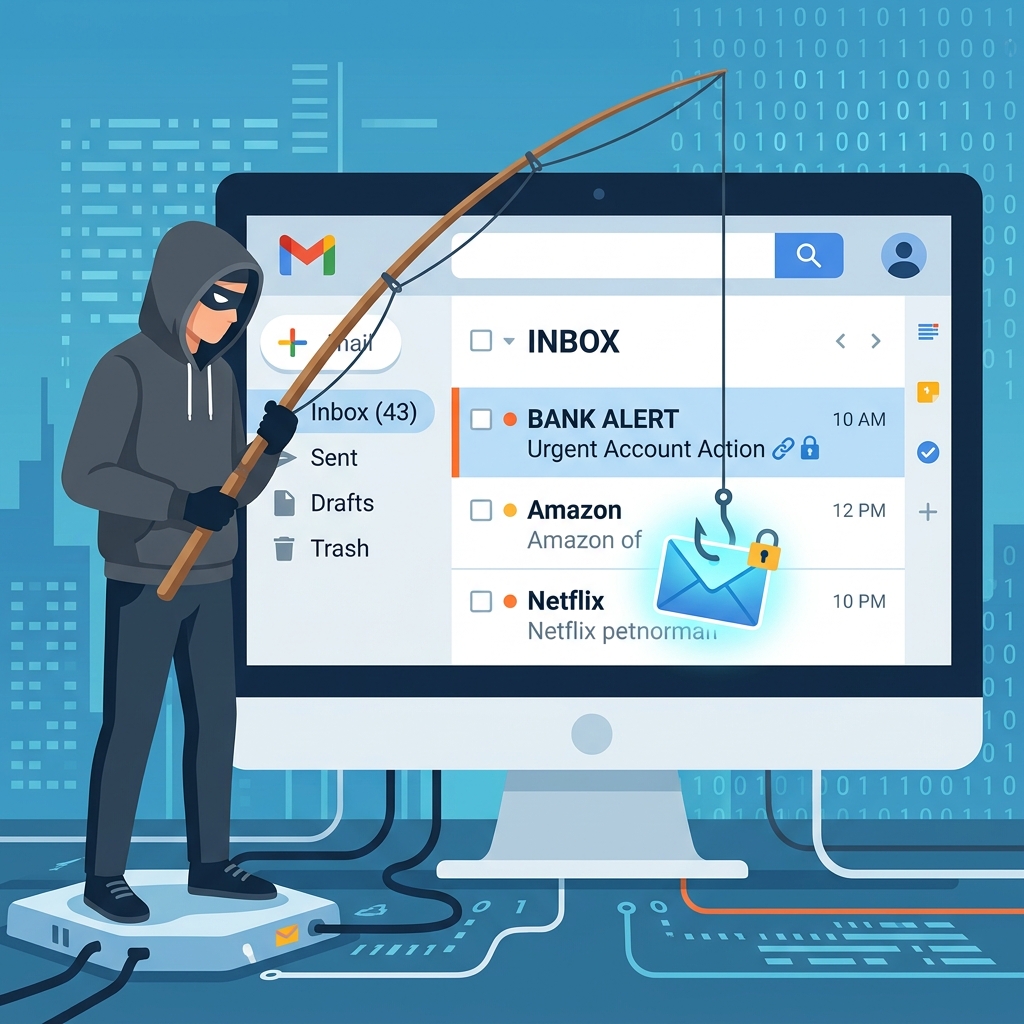
Phishing scams have become the scourge of the digital age. Unlike brute-force attacks where hackers use immense computing power to guess your credentials, phishing relies on human psychology. Cybercriminals use deception, urgency, and fear to trick individuals into willingly handing over their sensitive information. As these attacks grow increasingly sophisticated—leveraging AI-generated text, perfectly cloned websites, and targeted spear-phishing tactics—protecting your digital identity has never been more vital. A compromised password is often the key that unlocks the door to your digital life. Whether it is your email, your banking portal, or an internal corporate network, the consequences of falling victim to a phishing scam can be catastrophic.
1. The Mechanics of a Modern Phishing Attack
Historically, phishing emails were easy to spot. They were riddled with grammatical errors, featured suspicious sender addresses, and made outlandish claims (like a foreign prince needing a wire transfer). Today, the landscape is far more insidious. Attackers meticulously research their targets on social media to craft highly personalized "spear-phishing" emails. They spoof sender addresses to make it appear as though the email is coming from a trusted colleague, your bank, or a service provider you use daily. When you click a link in these emails, you are directed to a spoofed website that looks identical to the real one.
The moment you enter your username and password, the attackers capture it in real-time. Even worse, some advanced phishing kits can now intercept Multi-Factor Authentication (MFA) tokens by proxying the login session, making the attack even harder to stop. Organizations like the Cybersecurity and Infrastructure Security Agency (CISA) constantly warn about the evolving nature of these threats. As adversaries adapt, our defense mechanisms must evolve from simple password memory to using advanced cryptographic generation.
2. Why Password Reuse is a Phishing Multiplier
One of the biggest reasons phishing attacks are so devastating is the rampant problem of password reuse. The average person has dozens, if not hundreds, of online accounts. It is human nature to reuse the same password, or slight variations of it, across multiple platforms. This creates a domino effect. If you fall victim to a phishing scam that targets your social media account, the attackers will immediately try that same username and password combination on banking sites, email providers, and corporate portals. The blast radius of a single successful phish is magnified immensely by reused credentials.
To defeat this tactic, you must sever the link between your accounts. Every single online service you use must have a unique, mathematically complex password. Creating and remembering these is impossible for a human, which is why a Secure Random Password Generator is indispensable. By generating high-entropy, unique passwords for every account, you ensure that a successful phishing attack on one service does not compromise your entire digital footprint. Your exposure is limited strictly to the single breached service.
3. Protecting Sensitive Data Workflows
Phishing doesn't just target financial information; it often targets sensitive business data. Attackers frequently try to compromise accounts that handle documents, invoices, and contracts. For instance, if you regularly convert or compress business documents using online services, a compromised account could give attackers access to your confidential files. The loss of intellectual property or customer data through such a vector can cripple a business.
This is why using trusted, secure tools for your daily tasks is crucial. Whether you are generating a complex password to lock down your cloud storage, or utilizing secure PDF processing tools to handle sensitive invoices, the combination of secure authentication and trustworthy utilities minimizes your risk exposure. When you know your accounts are secured with unguessable passwords, you can operate online with greater confidence, knowing your document processing is protected.
4. The Human Firewall: Awareness and Tools
While technology provides the locks, human awareness is the security guard. Defeating phishing requires building a "human firewall." Always scrutinize the sender's email address, not just the display name. Hover over links to inspect the actual URL before clicking. Be incredibly wary of emails that create a false sense of urgency—such as threatening account suspension or claiming an unauthorized login has occurred. Attackers rely on panic to bypass your logical reasoning.
Combine this vigilant mindset with the right technological tools. Use a password manager to store the unique passwords created by your password generator. Password managers have built-in phishing protection because they will not autofill your credentials on a fake URL. If you navigate to a spoofed banking site, your password manager will refuse to fill in the password, immediately alerting you that something is wrong.
5. Advanced Mitigation Strategies
Beyond passwords, implementing multi-factor authentication (MFA) is critical. However, as discussed earlier, MFA can also be intercepted in sophisticated phishing attacks. This makes the strength of your initial password even more vital. By ensuring that your first line of defense is unbreakable, you force attackers into more complex, costly attack vectors that are easier for security systems to detect.
In conclusion, defeating phishing scams requires a holistic approach. It demands a combination of user education, skepticism, and the rigorous application of technological safeguards. By adopting strong password habits today, you are building a resilient defense against the cyber threats of tomorrow. Protect your digital identity and secure your workflows with the best tools available.