

Key Takeaways
- Free Tools Provide Value: You do not need expensive subscriptions to start finding valuable search phrases for your website.
- Search Intent Matters: Matching your content to user intent is just as important as finding high search volume terms.
- Long-Tail Keywords: Targeting specific, low-competition phrases offers the fastest path to ranking for new websites.
- Data Combination: Using multiple free platforms together gives you a comprehensive view of search trends and competition.
Understanding Keyword Research
Finding the exact words and phrases your target audience types into search engines forms the foundation of any successful content marketing strategy. When you build a website, the primary goal is attracting visitors who find value in what you offer. Without understanding the specific queries people use, you risk creating excellent content that nobody ever sees. This process involves analyzing search volume, competition levels, and user intent to make informed decisions about your editorial calendar.
Many beginners assume they must invest hundreds of dollars a month into premium software suites to uncover these insights. While premium platforms offer incredible data depth, the reality is that the best free keyword research tools provide more than enough information to build a high-traffic content engine. By leveraging platforms that pull data directly from search engines, you can identify hidden opportunities, spot rising trends, and capture organic traffic without breaking the bank. You can read more about search fundamentals on the official Google Search Central SEO Starter Guide.
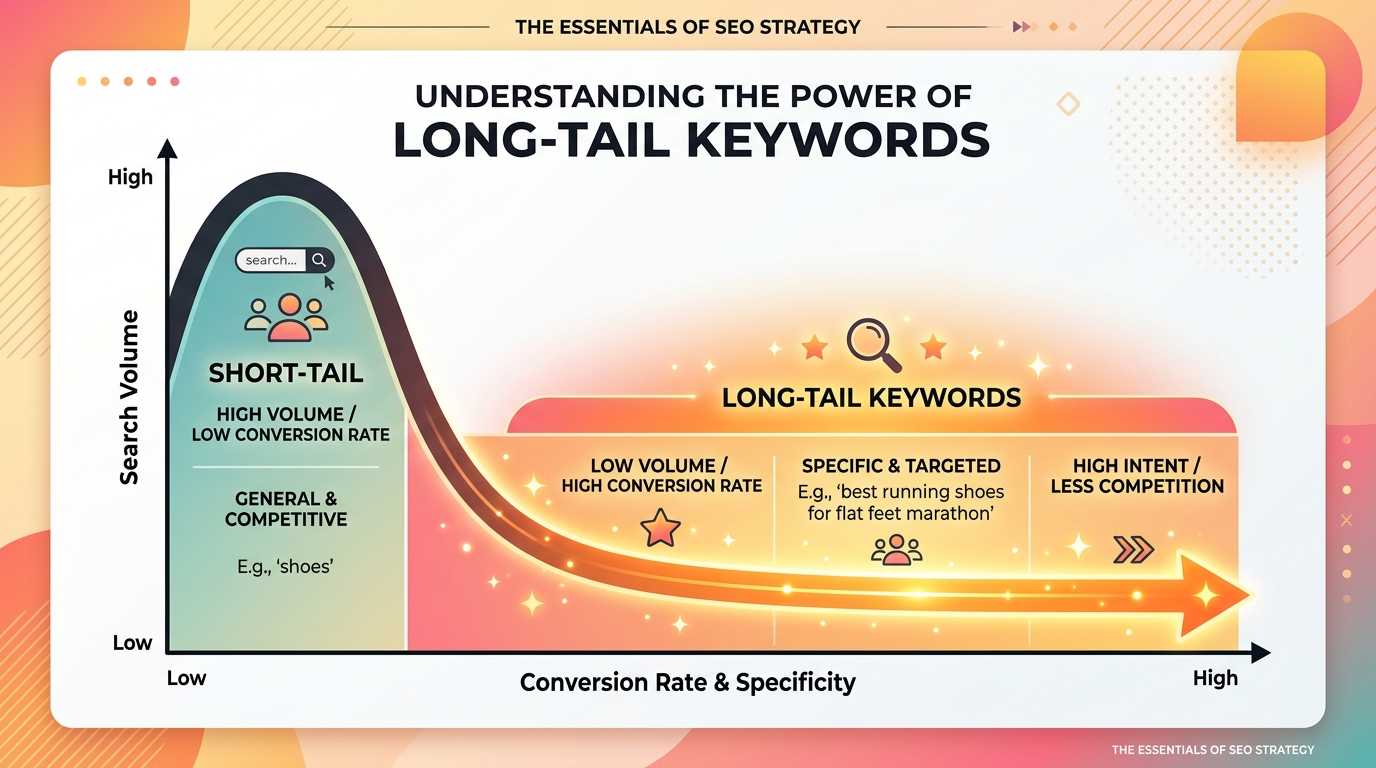
Before we look at the specific applications, we need to clarify what makes a search term valuable. High volume is attractive, but it often comes with fierce competition. For a new or growing site, the sweet spot lies in long-tail keywords. These are highly specific phrases, usually containing three or more words, that signal clear user intent. A user searching for "shoes" could want anything, but a user searching for "best running shoes for flat feet" has a very specific need. Meeting that specific need is how you rank well and drive engaged traffic.
Top Free Keyword Research Tools
The market offers several powerful applications that do not cost a dime. Each platform has distinct strengths, and the best strategy involves combining their insights to form a complete picture of your niche.
Google Keyword Planner
Built originally for advertisers running paid campaigns, Google Keyword Planner remains one of the most reliable sources of search data. Because the information comes directly from Google, you can trust its accuracy regarding search volumes and seasonal trends. To access it, you only need to set up a free Google Ads account. You do not need to run an active advertising campaign to use the planner.
When you enter a seed phrase, the tool generates hundreds of related ideas, showing you average monthly searches and competition levels. Keep in mind that the "competition" metric here refers to paid advertising competition, not organic ranking difficulty. However, terms with high paid competition usually indicate high commercial value. For authoritative guidance on keyword grouping, you can reference the Moz Guide to Keyword Research.
Google Trends
While it does not provide exact search volume numbers, Google Trends is unmatched for understanding the popularity of a topic over time. You can see whether interest in a specific subject is growing, plateauing, or declining. This insight helps you prioritize your content efforts. Writing about a rising trend allows you to capture traffic before the competition catches on.
You can also compare multiple phrases to see which one your audience prefers. For example, you might discover that users search for "budget travel" significantly more often than "cheap travel" during the summer months. The regional breakdown feature is also fantastic for local businesses, showing exactly where a topic has the most traction.
AnswerThePublic
AnswerThePublic excels at uncovering the exact questions people type into search engines. By entering a broad topic, the tool visualizes a massive wheel of queries grouped by who, what, where, when, why, and how. This is a goldmine for generating informational content ideas and structuring your articles to capture featured snippets.
The free version limits your daily searches, so make them count. Export the data to a spreadsheet and filter through the questions to find those most relevant to your expertise. Answering these specific user queries directly and thoroughly is a proven method for building authority and trust.
Ahrefs Free Keyword Generator
Ahrefs offers a free version of their powerful keyword generator. You enter a phrase, and it returns the top 100 related ideas along with precise search volumes and a Keyword Difficulty (KD) score for the first 10 results. The KD score estimates how hard it would be to rank on the first page, giving you a realistic expectation of your chances.
The tool also provides a separate list of questions related to your seed term. Checking this resource regularly helps you build a targeted list of low-difficulty, high-potential topics. For a deep dive into ranking factors, the Ahrefs SEO Basics guide offers extensive reading material.
Evaluating Keyword Metrics
Gathering a list of potential topics is only the first step. You must analyze the metrics to choose the right targets for your specific website. The three primary factors to consider are search volume, ranking difficulty, and search intent.
Search volume indicates the potential traffic, but do not ignore lower-volume terms. A phrase with 100 searches a month might seem small, but if those users are highly targeted and ready to engage, they are far more valuable than 10,000 casual browsers. Ranking difficulty helps you manage expectations. If the entire first page is dominated by massive publications with extremely high domain ratings, a new blog has very little chance of breaking through, no matter how good the content is.
Search intent is arguably the most critical metric. You must look at the current results to understand what the user actually wants. Are they looking to buy a product (transactional), find information (informational), or navigate to a specific website (navigational)? If you write a long-form informational guide for a keyword where all the top results are e-commerce product pages, you will not rank. The search engine has already determined that users want to buy, not read. The Search Engine Journal SEO Guide provides excellent examples of matching intent to content.
Workflow Integration with Utility Tools
When producing high-quality, optimized content, having the right utility tools on hand speeds up the process significantly. Managing word counts, comparing text versions, and formatting data are all parts of a professional content workflow.
For instance, when you are analyzing competitor articles or drafting your own posts, hitting the right length is important. You can use our Word Counter Tool to ensure your articles match or exceed the average word count of top-ranking pages.
As you update older posts to target new search terms, you need to track what changed. Our Text Compare Tool makes it simple to view the differences between your original draft and the revised, optimized version.
If you are dealing with technical SEO tasks, such as managing structured data or configuring APIs for your analytics dashboard, formatting becomes essential. Use the JSON Formatter to validate your schema markup before deploying it to your site. You might also encounter encoded strings in logs or analytics platforms; the Base64 Encoder/Decoder helps you parse that information quickly.
For marketing teams sharing reports, compressing large documents ensures they are easy to send over email. The PDF Compressor reduces file sizes without losing quality. If you need to combine multiple monthly traffic reports into a single end-of-year review, the PDF Merge Tool handles the job effortlessly.
We even provide specialized tools for specific content niches. If you run a finance or genealogy blog and need quick demographic calculations, the Age Calculator provides instant results. For developers dealing with authentication tokens in their tracking setups, the JWT Decoder is a vital resource.
Frequently Asked Questions (FAQ)
Do free keyword tools provide accurate data?
Yes, most reputable free tools pull their data directly from search engines or massive clickstream databases. While exact numbers might vary slightly between platforms due to different calculation methods, the relative volume and trends are highly accurate and reliable for planning your strategy.
How many keywords should I target per article?
Focus on one primary keyword representing the core topic of your article. Then, naturally incorporate 3 to 5 secondary or related phrases throughout the content. Do not force words into sentences where they do not belong. Write for the human reader first, and search engines second.
Is Keyword Density still important?
Strict keyword density percentages are a relic of old search algorithms. Modern search engines use natural language processing to understand the overall context and semantic meaning of your content. Instead of counting how many times a phrase appears, focus on covering the topic comprehensively and answering the user's intent. The Google Search Central Blog consistently emphasizes writing naturally over hitting specific repetition metrics.
How often should I do keyword research?
Conduct comprehensive research when launching a new site or major content category. Afterward, perform smaller research sessions monthly to find new trends and fill gaps in your editorial calendar. Search behavior changes constantly, so staying updated ensures your content remains relevant.
Can a new website rank for high-volume keywords?
It is extremely difficult for a brand new domain to rank for highly competitive, high-volume terms against established authoritative websites. The best strategy for a new site is to target long-tail, low-competition phrases to build initial traffic and trust. As your site gains authority, you can gradually target more competitive terms.