
Key Takeaways
- Complete Privacy: End-to-end encryption ensures that only the communicating users can read the messages. In principle, it prevents potential eavesdroppers—including telecom providers, internet providers, and even the provider of the communication service—from being able to access the cryptographic keys needed to decrypt the conversation.
- Public Key Cryptography: E2EE relies on asymmetric cryptography, where each user has a pair of keys: a public key for encrypting messages and a private key for decrypting them.
- Not Invincible: While E2EE protects the data in transit, it does not protect the data on the endpoints. If a device is compromised with malware, the data can be read before it is encrypted or after it is decrypted. Metadata is also often exposed.
- Widespread Adoption: Major platforms like Signal, WhatsApp, and specialized email providers rely on E2EE to protect billions of conversations daily.
Introduction to Data Privacy
In an era where digital communication is an integral part of daily life, the security of our data is under constant scrutiny. Every text message, email, photo, and voice call transmitted over the internet passes through multiple servers, routers, and networks before reaching its destination. Without proper security measures, this data can be intercepted, read, or altered by malicious actors, service providers, or government surveillance programs. This is where cryptography steps in as a fundamental shield, protecting our digital footprint from prying eyes.
Over the years, we have seen massive data breaches and unprecedented levels of surveillance. Consequently, the demand for robust data protection has grown exponentially. While various forms of encryption have existed for decades, many of them leave a crucial gap: the service providers themselves hold the keys to decrypt the data. To solve this trust issue, a stronger standard has emerged as the gold standard for personal privacy: End-to-End Encryption (E2EE).
What is End-to-End Encryption (E2EE)?
End-to-End Encryption, commonly abbreviated as E2EE, is a secure communication paradigm that prevents third parties from accessing data while it is transferred from one end system or device to another. In E2EE, the data is encrypted on the sender's system or device and only the intended recipient can decrypt it. The "endpoints" are the devices of the communicating parties, and nobody in between—not even the internet service provider (ISP), the application service provider, or malicious hackers—can read or tamper with the encrypted data.
To conceptualize this, imagine sending a locked box through the mail. You have the only key that can lock it, and your friend has the only key that can unlock it. The postal workers carrying the box can see the dimensions, weight, and the outside of the box (metadata), but they cannot see the contents inside. E2EE operates on a similar principle, ensuring that the "contents" of your digital messages remain completely confidential. Organizations like the Electronic Frontier Foundation (EFF) continuously advocate for E2EE as a basic human right in the digital age.
How End-to-End Encryption Works
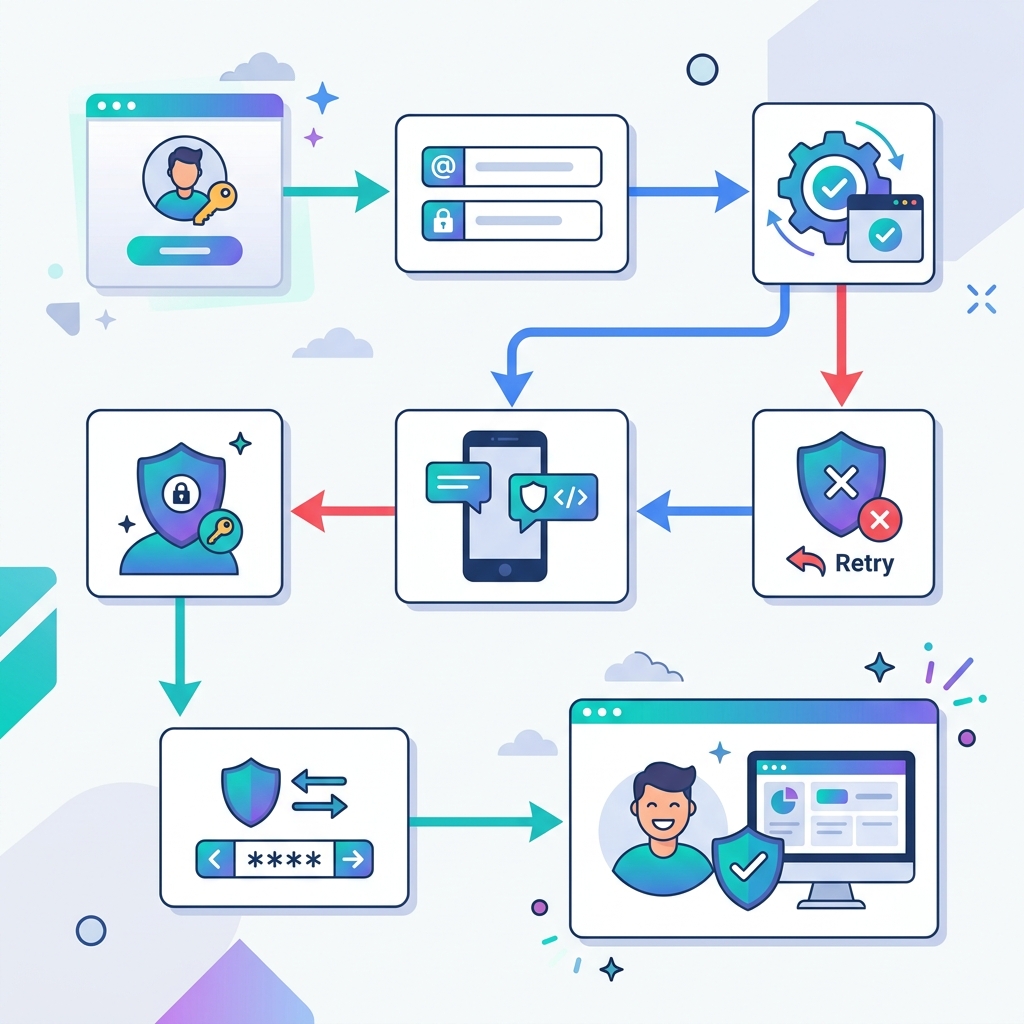
Understanding the mechanics of E2EE requires a dive into cryptography. Traditional encryption relies on a single shared key (symmetric encryption). However, sharing that single key securely over an unsecure network is inherently risky. E2EE solves this through a combination of asymmetric (public-key) and symmetric encryption algorithms to achieve both security and performance.
Public Key Cryptography
The foundation of modern E2EE systems is Public Key Cryptography. Every participant in an E2EE network generates a cryptographic key pair: a public key and a private key. The public key is shared openly with the world, much like a public mailing address. The private key, however, is kept strictly secret on the user's device. Data encrypted with a user's public key can only be decrypted by the corresponding private key. Organizations such as NIST provide comprehensive guidelines on secure key generation and management.
Key Generation and Exchange
When Alice wants to communicate with Bob securely, her device fetches Bob's public key from a central directory server. This public key is used to establish a secure session. Many modern E2EE protocols, such as the Signal Protocol, use advanced mechanisms like the Diffie-Hellman key exchange and the Double Ratchet Algorithm. These algorithms not only establish a shared secret between Alice and Bob but also constantly rotate the encryption keys for every single message. This property, known as Forward Secrecy, ensures that even if a private key is compromised in the future, past communications remain secure.
Encryption and Decryption Process
Because asymmetric encryption is computationally heavy and slow for large amounts of data, it is primarily used to securely exchange a temporary, symmetric session key. Once Alice and Bob have securely established this session key, they use fast symmetric encryption algorithms like AES (Advanced Encryption Standard) to encrypt and decrypt the actual messages, images, and files. You can learn more about AES and symmetric encryption from security resources at OWASP.
E2EE vs. Encryption in Transit
A common misconception is equating E2EE with Encryption in Transit (like HTTPS/TLS). While both are crucial for security, their scopes are fundamentally different. When you connect to a website using HTTPS, your connection is encrypted between your browser and the website's server. This prevents hackers on your local Wi-Fi network from intercepting your data.
However, with standard encryption in transit, the data is decrypted once it reaches the service provider's servers. The provider can read your messages, scan your emails for advertising keywords, or hand over your data to law enforcement.
In contrast, E2EE ensures the service provider only handles encrypted ciphertexts. They route the garbled data to the recipient without ever having the ability to unlock it. The decryption happens exclusively on the recipient's endpoint device. This shift in architecture transfers control and trust from the central provider back to the individual users.
Why End-to-End Encryption Matters
The importance of E2EE extends beyond just hiding secrets. It is a critical infrastructure component for modern democracy, journalism, and personal safety.
Protection Against Data Breaches
Servers get hacked. No matter how much money a corporation spends on cybersecurity, determined attackers often find a way in. If a service provider stores millions of unencrypted messages on their servers, a breach is a catastrophic event for user privacy. However, if the platform uses true E2EE, a hacker breaking into the server will only find useless, encrypted gibberish. Since the decryption keys are stored on the users' devices, the server data remains protected even when defenses fail.
Preventing Mass Surveillance
E2EE is one of the strongest technical barriers against untargeted mass surveillance by governments and intelligence agencies. By eliminating the central point of vulnerability—the service provider's servers—agencies cannot simply demand bulk access to communications. Instead, they must target specific endpoints (devices), which requires significantly more resources and legal oversight. The Mozilla Foundation actively campaigns to preserve strong encryption against legislative attempts to introduce "backdoors."
Common Use Cases and Applications
E2EE is no longer a niche technology reserved for cypherpunks. It has been integrated into numerous consumer applications that billions of people use every day.
Secure Messaging Apps
The most prominent example of E2EE is in messaging apps. Applications like Signal, WhatsApp, and Apple's iMessage use E2EE to secure chats, voice calls, and video calls. When you send a photo on WhatsApp, it is encrypted on your phone, travels through Meta's servers as ciphertext, and is decrypted only when it arrives on your friend's phone.
Password Managers
Cloud-based password managers are essential for modern security, allowing you to generate and store complex passwords. Because trusting a third party with all your passwords is risky, reputable password managers employ E2EE. Your password vault is encrypted locally on your device using a master password that the provider never sees. They only sync the encrypted blob across your devices.
Cloud Storage
While major cloud storage providers like Google Drive and Dropbox use encryption in transit and at rest (meaning they hold the keys), a growing number of privacy-focused alternatives offer E2EE cloud storage. Services like Tresorit and Proton Drive ensure that your files are encrypted before leaving your computer.
Limitations and Vulnerabilities
Despite its robustness, E2EE is not a silver bullet. Understanding its limitations is vital for a comprehensive security posture. Security researchers at CISA frequently highlight that encryption only protects data in transit, not the endpoints themselves.
Endpoint Security
The most significant vulnerability in an E2EE system is the endpoints—your smartphone or computer. If your device is infected with malware, keyloggers, or spyware, the attacker can read your messages before they are encrypted or after they are decrypted. E2EE protects the pipe, but not the reservoir.
Metadata Leakage
E2EE hides the contents of your messages, but it often does not hide the metadata. Metadata includes information like who you are communicating with, when the communication took place, the frequency of messages, and the approximate size of the data transferred. In many cases, metadata can reveal just as much sensitive information as the message contents themselves.
Man-in-the-Middle Attacks
If the process of exchanging public keys is compromised, a sophisticated attacker could perform a Man-in-the-Middle (MitM) attack. By substituting their own public key for the intended recipient's, the attacker intercepts, decrypts, reads, and re-encrypts the messages. To mitigate this, secure apps provide "safety numbers" or QR codes that users can verify out-of-band to ensure they are using the correct keys.
Developer Tools for Handling Encoded Data
When working with encryption, cryptography, and secure web tokens, developers frequently need to inspect encoded data formats, format JSON payloads, or compare textual differences. While true encryption cannot be simply decoded, many secure protocols rely on standard encoding formats like Base64 or JWTs (JSON Web Tokens) to transmit data.
If you are building secure applications or simply want to understand the data flowing through your systems, you might find these developer utilities immensely helpful:
- Need to inspect the headers and payload of a JSON Web Token? Use our JWT Decoder to safely decode tokens without sending them to a remote server.
- Working with Base64 encoded public keys or certificates? The Base64 Encoder & Decoder makes it easy to convert between raw strings and encoded formats.
- Reviewing large, complex JSON configuration files for secure services? Format them beautifully using the JSON Formatter.
- If you are updating security policies or reviewing cryptographic changes, our Text Compare Tool helps you spot exact line-by-line differences.
- For analyzing the length of security audit reports or managing documentation size, the Word Counter is quick and reliable.
- Additionally, when generating reports that contain sensitive PDF data, you might use the PDF Compressor or the PDF Merger locally to manage file sizes securely.
By ensuring your development workflows incorporate privacy-first tools, you mitigate the risk of accidentally leaking sensitive tokens, keys, or proprietary code during the debugging process.
Frequently Asked Questions (FAQ)
Can end-to-end encrypted messages be intercepted?
Technically, the encrypted ciphertext traveling over the internet can be intercepted by ISPs or attackers. However, because they do not possess the private keys required to decrypt the ciphertext, the intercepted data is completely unreadable and useless to them.
Does E2EE slow down my internet connection?
Modern E2EE protocols are highly optimized. Asymmetric encryption is only used briefly to establish a session, while the bulk of the data is encrypted using extremely fast symmetric algorithms. For the end user, the encryption and decryption processes happen in milliseconds and do not noticeably impact performance.
If I lose my private key, can the service provider recover my data?
No. This is a fundamental feature of genuine E2EE. Because the service provider never had your private key, they cannot decrypt your data or reset your key to grant access. If you lose access to your private key (or recovery phrase), your encrypted data is generally lost forever.
Why do some governments want to ban E2EE?
Law enforcement and intelligence agencies often argue that E2EE prevents them from monitoring criminals and terrorists. They sometimes push for legislation requiring companies to build "backdoors" into encryption protocols. However, cybersecurity experts universally agree that a backdoor for law enforcement is also a backdoor for malicious hackers. You cannot build a mathematically sound system that is secure against everyone except a specific government entity.
Are all secure messaging apps the same?
No, they vary wildly in their implementations. For example, Signal encrypts virtually everything, including most metadata. Telegram, on the other hand, only offers E2EE in specific "Secret Chats" and relies on standard server-side encryption for normal conversations. It's essential to research an application's specific encryption architecture.