
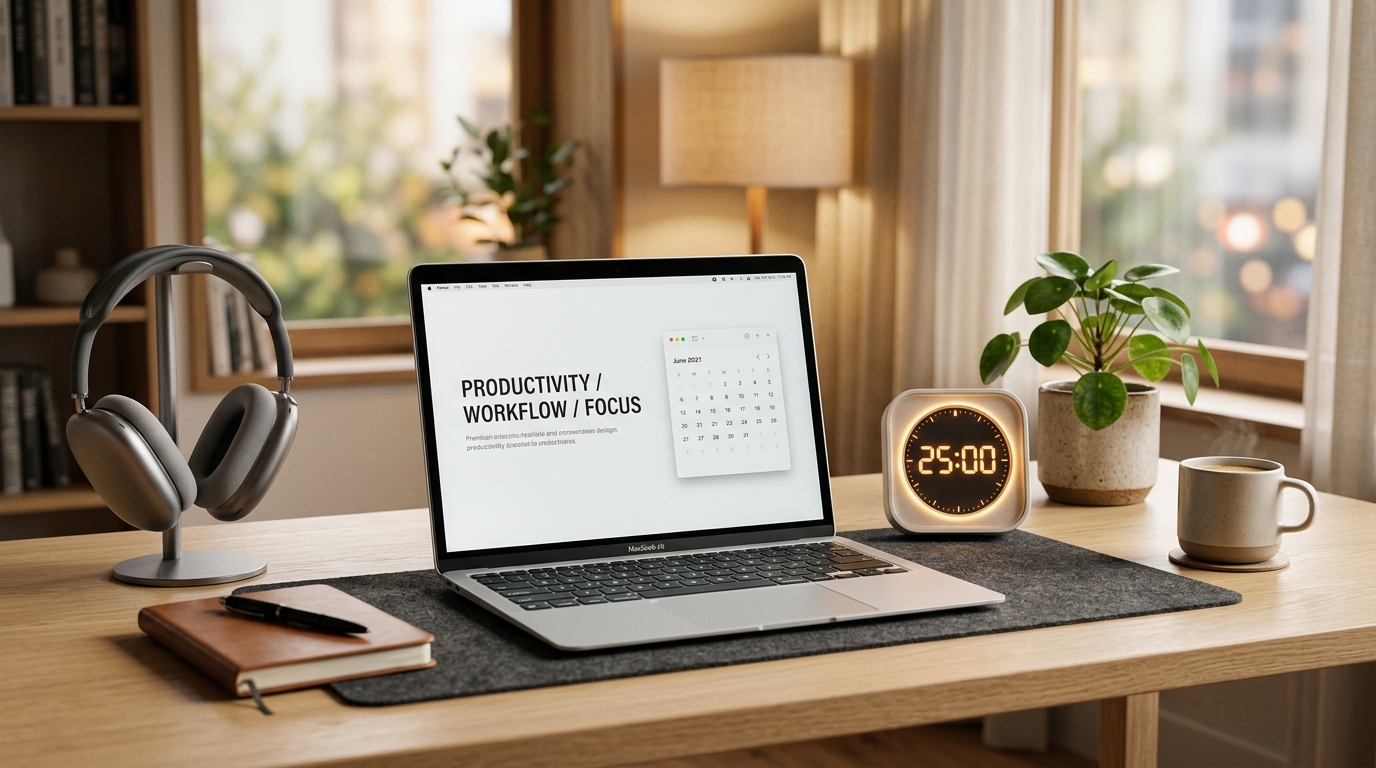
Surviving the Attention Economy
We are living in an era where our attention is arguably the most valuable commodity on the planet. From the moment we wake up to the second our heads hit the pillow, brilliant engineers and sophisticated algorithms are competing fiercely for our cognitive bandwidth. This relentless digital bombardment has led to a widespread crisis of fragmented attention. We constantly switch context between emails, social media feeds, instant messaging, and the actual work we are supposed to be doing.
The cost of this constant distraction is astronomically high. Not only does it decimate our productivity, but it also increases baseline anxiety levels, stifles creativity, and makes it incredibly difficult to engage in "deep work"—the focused, uninterrupted cognitive effort required to produce high-value output. To thrive in 2026 and beyond, the ability to concentrate deeply is no longer just a soft skill; it is a profound competitive advantage.
If you find yourself constantly derailed by notifications, struggling to complete important tasks, or feeling mentally exhausted by midday, you are not alone. Fortunately, focus is not a fixed genetic trait; it is a trainable muscle. By implementing the right strategies, you can take back control of your attention. Here are the 10 most proven, science-backed focus hacks you can implement immediately to skyrocket your productivity.

1. Master Your Environmental Design
Willpower is a finite resource that depletes throughout the day. If you rely solely on discipline to ignore your phone sitting on your desk, you will eventually fail. The secret of highly productive individuals is that they do not use willpower; they use environmental design. They engineer their physical and digital environments so that doing the right thing is the path of least resistance.
Start with your physical workspace. Clear off any visual clutter—stacks of paper, unwashed coffee mugs, or random gadgets. A minimalist environment reduces cognitive load, allowing your brain to allocate more processing power to the task at hand. Keep only what you absolutely need for the current project within arm's reach.
Equally important is friction design. If you want to stop checking your smartphone, increase the friction required to access it. Put your phone in another room, or at the very least, out of your direct line of sight. This simple physical separation breaks the unconscious habit loop of picking up the device every time you feel a moment of boredom.
2. Embrace Advanced Time Blocking
A to-do list without a schedule is merely a wish list. Time blocking is the practice of assigning specific chunks of time in your calendar to specific tasks. Instead of working from a generalized list of things to do, you treat your work sessions as immovable appointments with yourself.
To make time blocking effective, you must be realistic about how long tasks actually take. We often fall victim to the planning fallacy, underestimating the time required for complex projects. When scheduling your blocks, add a 20% buffer to account for unexpected delays or cognitive fatigue.
Dedicate your absolute best hours—usually the first two hours of your workday—to your most cognitively demanding tasks. Do not squander your peak mental energy on reactive tasks like responding to emails or organizing files. Protect this block of time ruthlessly. Let your team know that you are unavailable during this period unless there is a genuine emergency.
3. Utilize the 50/10 Pomodoro Rhythm
The traditional Pomodoro Technique (25 minutes of work followed by a 5-minute break) is excellent for getting started when you are feeling overwhelming procrastination. However, for deep, sustained focus, many knowledge workers find that 25 minutes is just not enough time to hit a state of flow.
Instead, try the 50/10 variation: 50 minutes of intense, uninterrupted work followed by a 10-minute break. This longer sprint allows you to dive deep into complex problem-solving, coding, writing, or strategic planning. To track this seamlessly, you can use our built-in Online Pomodoro Timer, which you can customize to fit your preferred work intervals.
During your 10-minute break, it is critical that you completely disconnect. Do not look at another screen. Stand up, stretch, look out a window to relax your eye muscles, or grab a glass of water. Proper recovery during these micro-breaks is what allows you to sustain high performance throughout an entire eight-hour workday.
4. Schedule Micro Dopamine Detoxes
Our modern digital diets are overloaded with cheap dopamine—the neurochemical reward we get from social media likes, breaking news alerts, and fast-paced entertainment. When your brain gets used to this constant high stimulation, everyday work tasks—which offer delayed, subtler rewards—feel agonizingly boring by comparison.
To reset your brain's reward system, practice scheduling micro dopamine detoxes. Designate the first hour after waking up and the last hour before going to sleep as completely screen-free zones. This prevents the immediate spiking of your dopamine levels in the morning and allows your mind to wind down naturally at night, significantly improving your sleep quality and your ability to focus the next day.
5. Ruthless Digital Decluttering
A messy digital workspace is just as distracting as a messy physical one. If your desktop is a graveyard of hundreds of random files, or your browser is groaning under the weight of 40 open tabs, you are bleeding cognitive energy.
Commit to a weekly digital declutter. Close tabs you no longer need. Unsubscribe from newsletters you never read. Organize your files into a logical folder hierarchy. If you regularly work with large amounts of text or data, utilize tools to keep things neat. For instance, if you are a developer, using a JSON Formatter can instantly turn a chaotic wall of data into readable, structured information, saving you the mental strain of parsing it manually. Every small reduction in digital friction adds up to a massive gain in overall focus.
6. Optimize Brain Fuel (Diet & Hydration)
Your brain constitutes only about 2% of your body weight, yet it consumes roughly 20% of your energy. What you eat and drink profoundly impacts your cognitive performance and ability to concentrate. A heavy, carbohydrate-loaded lunch will inevitably lead to a massive insulin spike followed by a midday crash, colloquially known as a "food coma."
To maintain steady focus, prioritize proteins, healthy fats (like those found in avocados, nuts, and salmon), and complex carbohydrates with a low glycemic index. These foods provide a slow, sustained release of glucose to the brain.
Furthermore, even mild dehydration—as little as a 1-2% drop in body water—can cause brain fog, memory impairment, and severe drops in concentration. Keep a large water bottle on your desk and make it a habit to sip constantly throughout your work blocks.
7. Leverage Binaural Beats
Sound plays a massive role in concentration. While some people work best in absolute silence, the sudden noises of a modern office or a coffee shop can easily break your flow state. Wearing high-quality noise-canceling headphones is step one. Step two is playing the right audio.
Scientific studies have shown that listening to binaural beats—specifically those in the Beta (14-30 Hz) or Gamma (30-50 Hz) frequencies—can actively encourage the brain to enter states of heightened focus and alertness. If binaural beats aren't your preference, try instrumental music like lo-fi hip hop, classical, or video game soundtracks. Video game music is specifically composed to keep the player engaged and moving forward without being a primary distraction.
8. The Two-Minute Momentum Rule
Often, the hardest part of focusing is simply starting. When we look at a massive project, the sheer size of the mountain we have to climb creates psychological friction, leading straight to procrastination.
The two-minute rule, popularized by David Allen in his Getting Things Done methodology, states that if a task takes less than two minutes to complete, you should do it immediately rather than putting it on a to-do list. But it can also be adapted to overcome starting friction: tell yourself you will work on the intimidating project for just two minutes.
Open the document, write a single sentence. Open your IDE, write a single line of code. By lowering the barrier to entry to something absurdly easy, you trick your brain into starting. Because of the Zeigarnik effect—the psychological tendency to remember and want to finish uncompleted tasks—once you start, momentum takes over, and that two minutes easily turns into an hour of deep focus.
9. Strategic Caffeine Naps
If you hit a wall in the mid-afternoon where focus seems impossible, rather than trying to power through with sheer willpower, try a strategic "caffeine nap."
Caffeine takes approximately 20 minutes to metabolize and enter your bloodstream. The hack works like this: quickly consume a cup of coffee or tea, then immediately lay down and close your eyes for exactly 20 minutes. You will get the restorative benefits of a short power nap—which clears out adenosine, the neurotransmitter that makes you feel sleepy—and just as you wake up, the caffeine kicks in. The synergistic effect results in an incredible surge of alertness and renewed focus for the second half of your day.
10. The End-of-Day Shutdown Ritual
Your ability to focus tomorrow is heavily dependent on how you end your day today. Many people log off from work with a dozen open loops in their head—unanswered emails, unfinished tasks, looming deadlines. This residual stress prevents you from fully relaxing in the evening, leading to poor sleep and a compromised ability to focus the next morning.
Implement a strict, 10-minute shutdown ritual at the end of your workday. Review what you accomplished, migrate unfinished tasks to tomorrow's list, and write down the top three priorities for the next morning. By getting these thoughts out of your head and onto paper (or a digital list), you signal to your brain that the workday is officially over and it is safe to disconnect. You will return to your desk the next day with a clear mind and a sharp, focused plan of attack.
Frequently Asked Questions (FAQ)
How long should a deep focus session last?
For most knowledge workers, a deep focus session should last between 50 to 90 minutes. Scientific studies suggest that the human brain operates in "ultradian rhythms," cycling through peaks and valleys of energy every 90 minutes. Pushing beyond 90 minutes without a break usually results in diminishing returns and cognitive fatigue.
Can listening to music really improve my concentration?
Yes, but it depends on the type of music. Music with complex lyrics can actually distract you, as your brain tries to process the language. Instrumental music, lo-fi beats, classical music, or specifically designed binaural beats are highly effective for drowning out background noise and stimulating the focus centers of the brain.
What if I can't completely eliminate distractions at my job?
If you work in a reactive environment (like customer support or a highly collaborative team), you may not be able to block off hours at a time. In this case, focus on micro-blocks. Try to secure just 25 minutes (one Pomodoro) of uninterrupted time. Communicate with your team about your focused periods, use asynchronous communication where possible, and always tackle your most important task first thing in the morning before the day's chaos begins.
Is the Pomodoro Technique effective for studying?
Absolutely. The Pomodoro Technique is one of the most effective study methods because it forces you to take regular breaks. These breaks allow your brain to consolidate information and move it from short-term to long-term memory. Using a Pomodoro timer prevents study burnout and keeps your mind fresh for much longer periods.